

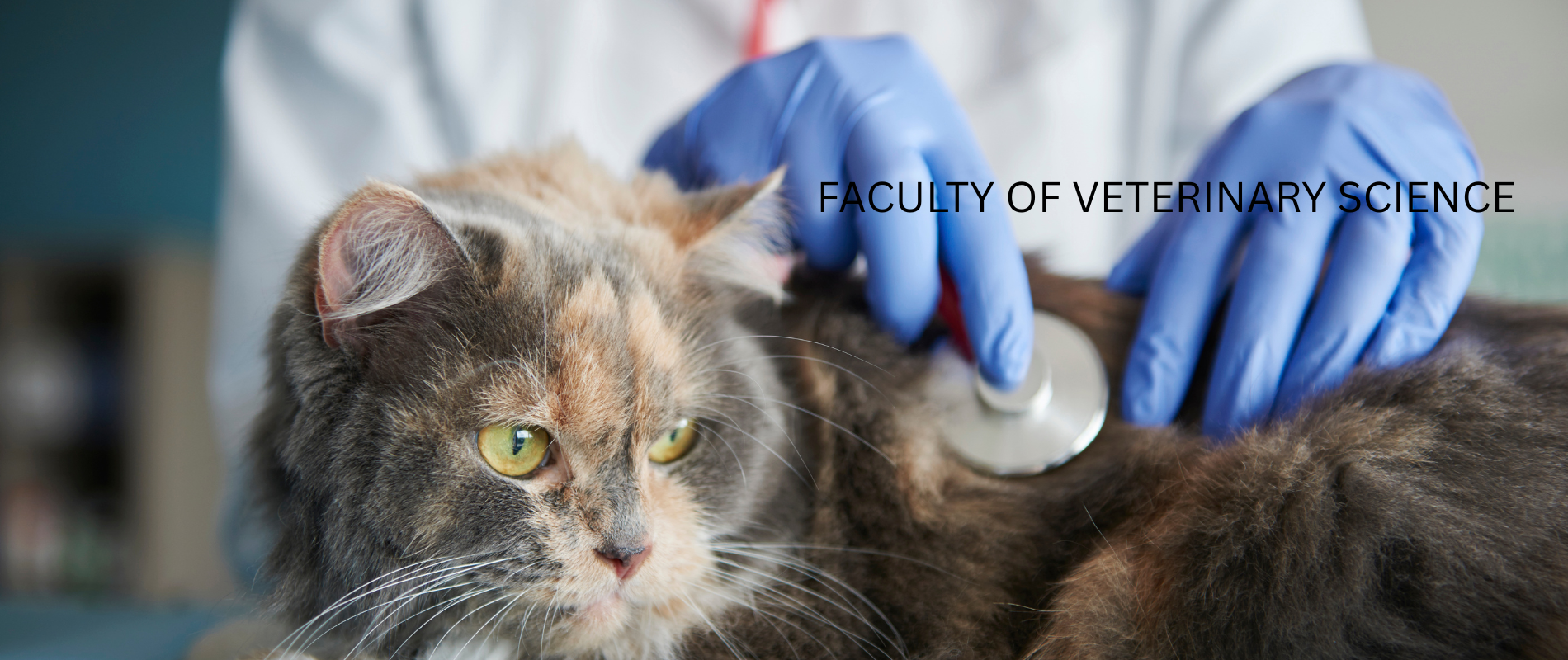
GENERAL OVERVIEW
The Clinical Veterinary Studies Department offers courses to the two last parts of the BVSc degree programme, Postgraduate and Veterinary Nurses training. The training covers the theory and practice of the entire spectrum of Veterinary Science.The Department also offers consultancy services through the University of Zimbabwe Veterinary Teaching Hospital and through its specialist staff in the following fields: Epidemiology, Herd Health & Ruminant Medicine and Wildlife & Exotic Medicine. There is a strong clinical rotation and ambulatory service that exposes the student to the varied facets of the Veterinary profession.
Teaching
The Department of Clinical Veterinary Studies is primarily responsible for equipping Veterinary Science students with diagnostic and clinical skills underlying the practice of Veterinary Medicine and other aspects of Veterinary Science. The training covers the theory and practice of the entire spectrum of Veterinary Science, including: General Surgery, Anesthesia & Radiology, Small Animal Medicine & Surgery, Equine Medicine & Surgery, Ruminant Medicine & Surgery, Herd Health & Reproduction, Diseases of Pigs and Poultry, Exotic Animal Medicine, Wildlife Management & Diseases, Epidemiology, Clinical Pathology, Public Health, Veterinary Jurisprudence & Regulatory Control of Veterinary Drugs and Applied Business Management
The practical component of the training is centered mainly on the Veterinary Science Teaching Hospital and its ancillary laboratories. The Department also runs an ambulatory clinic in which students learn the art and science of veterinary practice under field conditions. In addition, the Herd Health & Reproduction section operates a farm visit programme which endows students not only with clinical skills, but also economic appraisal of animal production systems. As an integral part of the training process, students are attached to private veterinary practitioners to widen the scope of their education. Through the provision of a student exchange programme, selected students have the opportunity to undergo part of their veterinary training at renowned Veterinary Schools abroad.
Apart from formal lectures and practical work, students learn by way of research projects and clinical case presentation. Since these disciplines allow students to pursue a subject matter in greater depth and breadth, they empower the trainees with analytical prowess and scientific skills thus effectively preparing them for joining the scientific community. Introductory courses are also conducted in veterinary jurisprudence and veterinary economics to acquaint the prospective veterinarians with the legal framework and economic environment in which the veterinary profession operates.
The teaching activities of the Department of Clinical Veterinary Studies go beyond the basic BVSc degree. At postgraduate level, the department offers the following degree programmes: Master of Veterinary Science degrees in Ruminant Medicine, Veterinary Reproduction & Herd Health, Small Animal Medicine and Veterinary Epidemiology. Candidates may also register for Master of Philosophy (MPhil) or Doctor of Philosophy (DPhil) degrees by research. The Department also offers a Diploma in Veterinary Nursing (DVN).
Service
Through its mobile units and established facilities, the Department of Clinical Veterinary Studies offers diagnostic, clinical and consultancy services to the farming community and pet owners.
Faculty of Veterinary Science Teaching Hospital
The Faculty of Veterinary Science Teaching Hospital offers services to clients directly or through referring Veterinary Practitioners. The hospital has modern equipment and infrastructure that enable effective diagnosis, treatment and control procedures to be instituted.
Ambulatory Clinic
The services of the Ambulatory Clinic are made available to communal and small-scale farmers through regular visits by Veterinary Surgeons and Clinical Students.
Clinical Pathology Laboratory
The clinical pathology laboratory undertakes an array of diagnostic tests including clinical biochemistry, urinalysis, microscopy, faecal examination, haematology and haemostasis.
In clinical biochemistry, measurement of enzymes such as alkaline phosphatase, alanine aminotransferase, aspartate aminotransferase for small animals and aspartate aminotransferase and gamma glutamyl transferase for large animals provides a minimum data base for the evaluation of liver function. Similarly, the integrity of muscle function is tested by quantifying serum creatine kinase levels whilst serum amylase levels serve as an index of pancreatic function. In cardiology, organic integrity of the heart is reflected in serum lactate dehydrogenase levels. Renal function can be assessed by measurement of blood urea and creatinine levels.
The Reproduction Unit
The Reproduction Unit has a laboratory that offers the following: Complete Breeding Soundness Evaluation; pregnancy diagnosis in small animals and horses using radiology and/or ultrasound techniques, monitoring of estrus cycle in dogs using vaginal cytology, artificial Insemination, mastitis tests and collection of perpetual washes.
The laboratory is a valuable component of the clinical activities of the Reproduction Unit in the field as well as at the Veterinary Science Teaching Hospital.
Poultry and Wildlife Unit
The routine post-mortem diagnosis of poultry and exotic species is the responsibility of this expanding Unit. Other activities of the Unit include histopathological examination and microbiological analysis of samples from referring veterinarians. In addition, the Poultry and Wildlife Unit has a vibrant farm visit programme and an advisory service for owners on the treatment and control of diseases.
Herd Health Unit
Commercial farmers benefit from the Department’s Herd Health and Production Management programmes which focus on economic production of livestock and livestock products, even in the absence of overt disease. A porcine herd health section is in existence. Regular visits to pig farmers are organized and laboratory as well as post-mortem diagnosis of cases is carried out. Effective advice is given on disease prevention and management of porcine herds.
Chairperson

Dr Norman Leo Mukarati
Qualifications: DPhil Candidate (UZ), MSc (Royal Veterinary College, London), Cert. Vet. Epidem. & Econs. (Reading, UK), BVSc (UZ)
email: This email address is being protected from spambots. You need JavaScript enabled to view it. / This email address is being protected from spambots. You need JavaScript enabled to view it.
Contact Details
The Chairman
Department of Clinical Veterinary Sciencess
University of Zimbabwe
P.O. Box MP167
Mount Pleasant
Harare
ZIMBABWE
Telephone: +263-4-303211 Ext. 19100
E-mail: This email address is being protected from spambots. You need JavaScript enabled to view it.
Veterinary Hospital: +263-4-303574; Mobile: +263 774 449783