

News & Events
Programmes Offered
Undergraduate
- Bachelor of Medicine and Bachelor of Surgery Degrees Part 3
- Bachelor in Dental Surgery Part 3
Course Content
1. Physiology of the Immune system
- Overview of Immunology
- Cells of the immune System
- Innate immunity
- Acquired/ Adaptive immunity
- Antigen Presentation
- Complement System Regulation and Disorders
- Immune Deficiency
2. Immunogenics
- Genetics of major histocompatibility complex (MHC)
- Genetics of Antibody Diversity
- B and T cell Receptor Complexes
- Transplantation
3. Infection and Tumor Immunity
- Viral Infections
- Bacterial infections
- Immune Responses to TB
- Parasitic and Helminithic infections
- Immune Responses to Tumours
- Lymphoproliferative diseases
- Vaccines
- Immunopathogenesis of HIV
4. Autoimmunity
- Rheumatoid Arthritis
- Systematic Lupus Erythematosus
- Multiple Sclerosis
- Graves` Disease
- Autoimmune Thyroiditis
- Myasthenia Gravis
- Vasculitis
5. Clinical Immunology and Diagnostics
- Gastroenterology
- Liver diseases
- Allergy and other hypersensitivities
- Kidney diseases
- Haematological diseases
- Skin diseases
- Neuroimmunological diseases
- Eye diseases
- Cardiovascular diseases
- Tuberculosis
- Malaria
- Nutrition
- Pregnancy
- Techniques in Clinical Immunology.
Research
Department of Immunology – Department of Visceral Surgery and Medicine, Inselspital Bern, Switzerland Gut Health Research Collaboration
In addition to HIV and myriads of (co)infections, pregnant women in Africa are at risk of adverse pregnancy outcomes due to poverty and associated food insecurity, malnutrition and poor hygiene. Further, infants are at risk of stunting, neurodevelopmental delay, growth retardation and infections in these resource-limited settings. However, specific mechanisms are not fully understood. Specific intestinal pathologies associated with a deranged intestinal microbiota under these conditions are termed environmental enteropathy. To clarify disease mechanisms in environmental enteropathy, Professor Kerina Duri at the Department of Immunology has recently partnered with Professor Andrew Macpherson, Dr. Benjamin Misselwitz and Professor Uwe Sauer, microbiota experts from the Department of Visceral Surgery and Medicine, Inselspital Bern and Eidgenössische Technische Hochschule (ETH, Swiss Federal Institute of Technology) Zurich, respectively, Switzerland. In Zimbabwe, a comprehensive network of collaborating partners from the Departments of Research Support Centre, Community Medicine, Paediatrics and Obstetrics and Gynaecology has been established. The focus of this scientific collaboration is to investigate the development of the infant microbiota and immune system. We will make use of the established Zimbabwe Birth Cohort (funded by the Welcome Trust), housed in the Department of Immunology which has recruited more than 1000 mother-infant pairs in the years 2016-2018 in the South western high-density suburbs of Harare. This area is an ideal location to study environmental enteropathy.
The intestinal microbiota comprises a large number of bacterial species (>1000 in each individual) with vast metabolic activity. The intestinal microbiota is best understood as a dynamic network of many bacteria which interact with each other and the host via a large number of intestinal metabolites. In the first year of life, the intestinal microbiota matures until it acquires its full metabolic capacity at about 2 years of age. In environmental enteropathy, the maturation of this microbiota is delayed but mechanistic details remain unclear. To fill in that knowledge gap we are planning to analyse the infant microbiota by 16S sequencing for assessment of the composition of the microbiota at phylum and species level and evaluation of microbiota diversity. Further, bacterial full genome metagenomics shotgun sequencing will identify bacterial genes present, which define the metabolic potential of the microbiota. In addition, 18S mRNA sequencing will assess eukaryotic commensals including fungi and parasites prevalent in our setting. Further, polymerase chain reaction (PCR) technology will detect and quantify maternal-infant cytomegalovirus and hepatitis B viral loads with specific microbiology tests addressing enteropathogen colonization. Shotgun metagenomics sequencing at Bern University will be done using an Illumina Hiseq 2500 with 125 base pair-ended mode. The software packages Trimmomatic, Bowtie2, HTseq, Samtools, and DESeq2 will be used to map genes and test for differential expression. Small metabolite composition of intestinal content will be determined by high-throughput mass spectrometry enables analysis of a high number of samples within a short period of time and at low costs. Current mass spectrometry techniques allow the identification of up to 10000 signals per sample of which typically 300 signals are easily identifiable. High-throughput mass spectrometry will be performed at ETH Zurich. The molecules of the intestine identified by these techniques are referred to as the intestinal metabolome. Metabolome information will be related to the bacteria enzyme composition at a given time point in microbiota maturation and provide comprehensive network information. Joint microbiota-metabolome analysis will be performed in paired infant-mother stool and breast milk samples. Data from these networks will be correlated with pregnancy outcome and maternal-infant health outcome data, especially regarding infant (immune) development for identification of disease mechanisms in environmental enteropathy.
The foregoing techniques are rare, unique and currently not available in Zimbabwe. Our Swiss partners are committed to facilitate capacity building of microbiota analysis with 16S sequencing (for bacteria species composition) and 18S sequencing (for microbiota eukaryotic composition) making use of the genetic analyser currently being under-utilised in the Immunology Department. With some direct funding from Switzerland and support for acquisition of external third party funding we are aiming to train two PhD students and one Post doc starting this year 2019, through to 2023. This capacity building in advanced technologies will help further develop research skills and improve the scientific profile of the Department. At the same time, this collaboration will enable profound training of future academic staff members for the University of Zimbabwe. Furthermore, this collaboration will help to understand the impact of microbiota changes on the disease course of environmental enteropathy in low-resource settings with the aim to improve the care of mothers and infants in Zimbabwe and the region.
Staff
Chairperson
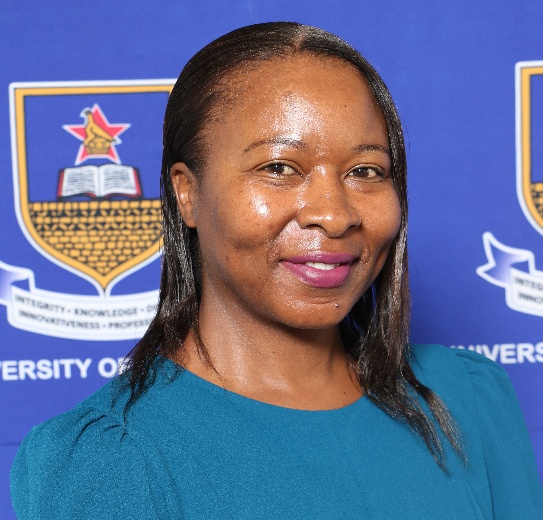
Dr Milcah Dhoro
Qualifications:
- Doctor of Philosophy in Pharmacogenetics, University of Zimbabwe, 2015.
- Master of Philosophy Molecular Biology, University of Zimbabwe, 2010.
- Bachelor of Science Honors Biological Sciences, Midlands State University, 2004.
Dr Dhoro has more than 15 years of experience in the field of molecular biology in particular human genetics and pharmacogenomics. Her research interests focus on understanding the effects of patient genetic variability with respect to disease susceptability and response to medicines. After successful completion of her DPhil studies in 2015, she received a Fogarty/NIH Global Health Scholars fellowship to persue a postdoctoral fellowship in immunogenetics. In August 2017, she received an award to attend a one month long International Summit in Human Genetics and Genomics which was hosted by the National Human Genome Research Institute (NHGRI) at the National Institutes of Health, USA. In 2019, she enrolled into a two-year Medical Genetics and Genomics Certificate program offered by the NHGRI at the NIH and completed it in 2021. Dr Dhoro is also a member of the Biobank and Cohort Network (BCNet) International Working Group- a network set-up to address challenges in biobanking and research including ethical, legal and social issues.
Research interests:
- Pharmacogenomics
- Human health and genomics
- Biobanking and research
- Molecular Diagnostics
Publications
http://www.ncbi.nlm.nih.gov/myncbi/browse/collection/50197887/?sort=date&direction=ascending
Email address:
This email address is being protected from spambots. You need JavaScript enabled to view it.
This email address is being protected from spambots. You need JavaScript enabled to view it.
Phone Number: +263772391978
Senior Lecturer

Dr T. Mawoza
Research interests:
-
Ethnopharmacology (Traditional medicines), Women’s health< HIV
Email address: This email address is being protected from spambots. You need JavaScript enabled to view it.
Phone Number: +263774414744
Read more.....