












Dr. Julius Musevenzi
Publications
- Musevenzi Julius & Barbara Chibvamushure: Land Reform & Social Differentiation in Zimbabwe, Re-Inventing the Wheel of Inequalities in Urban Development in the Book “Inclusive Urban Development in the Global South, Intersectionality, Inequalities and Community” (Chapter 7)Routledge, New York & London (2020)
- Musevenzi Julius: Changing Trends in Social Differentiation and their Impact on Rural Livelihoods in Muzarabani, Gokwe and Mwenezi Districts of Zimbabwe (Chapter 9), in the book titled: The Policy Governance-management Nexus in the Planning of Human Settlements in Zimbabwe. University of Zimbabwe Publications, Harare, Expected July 2020
- Julius Musevenzi: El Nino Induced Drought, Livelihoods and Adaptive Strategies in Chiredzi District, in the Book Titled: Environment, Infrastructure and Services in Urban and Regional Planning in Zimbabwe: A systems Approach. University of Zimbabwe Publications, Harare, December 2017
- Book Chapter Title: Rural Livelihoods Diversification in Semi-Arid Districts of Zimbabwe, in the Book Titled: Sustainability in the Planning, Programming and Implementation of Development Projects, Policies and Programmes in Zimbabwe, Springer (2019), Julius Musevenzi & Benjamin Gweru
- A Development Policy Imperative of the Rural Livelihoods Diversification in Marginal Areas of Zimbabwe, in the Book Titled: Sustainability in the Planning, Programming and Implementation of Development Projects, Policies and Programmes in Zimbabwe, Springer (2019), Julius Musevenzi
Journal Articles
1.The Lived Experiences of Male Survivors: The Case of Adult Rape Clinic at Parirenyatwa Hospital, Harare. Journal of Clinicians from Academic Outliers 7(1) -1-24. Musevenzi, J. and Musevenzi M.
2.J. Musevenzi. Externally Fostered Sorghum and Millets Production in Semi-Arid Regions of Zimbabwe. Contribution to Community Resilience under the Impact of Urbanisation and Climate Change: Cases and Experiences from Zimbabwe. Ed. By I.Chirisa and C. Mabeza (2019), USBB-10:9956-550-05-1
3.Externally fostered processing and marketing of non-timber forest products (NTFPs), contribution to household income, the analysis of opportunities and challenges in the value chain. Julius Musevenzi, University of Zimbabwe Review, UZB Review, Volume 4, No. 2, July-December 2016
4.“The African Independent Apostolic Church’s Doctrine under Threat: The Emerging Power of Faith-based Organisations’ Interventions and the Johanne Marange Apostolic Church in Zimbabwe”. Julius Musevenzi, Journal for the Study of Religion, 30, 2: 178-206, July 2019 available at http://dx.doi.org.za/pdf/jsr/v30n2/09.pdf
5.Crime within a Crime! The Invisible Roles of Prison Officers and Thriving Gang Networks! The case of Harare Central and Khami Maximum Prisons in Zimbabwe, Julius Musevenzi, June 2018 Special Issue of the Review of Human factor Studies (RHFS)
6.El Nino-Induced Drought, The New Lion of Chiredzi District, An Analysis of the Impact of Climate Change on Livestock, Zambezia, Volume 44, No. 1, 2017, Julius Musevenzi & Isaac Chaipa
7. When Migration is the only diversification option available, what changes? An analysis of the contribution of remittances to sustainable livelihood development in semi-arid districts under politically charged environments University of Zimbabwe Review, UZB Review, Volume 6, No. 3, July-December 2019
Research Fellow

Publications
1.Zanamwe, L., Mbengo, I., Sibanda, G., & Gwatirisa, C. (2011). Zimbabwe Joint Youth Climate Baseline Survey Executive Report. UNDP, ILO & SNV.
2. Mlotshwa, S.,Mutongi, C., & Gwatirisa, C. (2016). The Impact of the 2015–2016 Drought on Women. Journal of Economics and Finance (DRJ-JEF), Volume 2, Issue 9 (September 2017), pages 10-203.4. Gwatirisa, C., Mukamuri, B., & Chirisa, I. (2019). The Policy Environment of Urban Sanitation in Zimbabwe, 2000–2018: A Case of Ablution Facilities in Harare. Journal of Public Administration and Development Alternatives (JPADA), Volume 4, Issue 2, December 2019.
3. Gwatirisa, C., Chirisa, I., & Mukamuri, B. (2019). The Policy Governance–Management Conundrum in the Quest for the Functionality of Public Sanitary Facilities in Harare. Zambezia, Vol. 46, Issue 1.
4. Gwatirisa, C., Chirisa, I., & Mukamuri, B. (2019). The Policy Governance–Management Conundrum in the Quest for the Functionality of Public Sanitary Facilities in Harare. Zambezia, Vol. 46, Issue 1.
5. Gwatirisa, C., Mukamuri, B., & Chirisa, I. (2019). Group Networking and Policy Implementation Dynamics in Zimbabwe’s Urban Areas. Journal of Public Administration and Development Alternatives, Vol. 4(2), 18–43.
6.Gwatirisa C, Mukamuri, B and Chirisa I (2021) Analysis of Policy Implementation Dynamics in Zimbabwe’s Urban Areas; A Case Study of Public Sanitary Facilities in Harare.Journal of Public Administration and Development Alternatives (JPADA), Volume 4, Issue 2, in December 2019.
7.Nyoni, J., Gwatirisa, C., Nyanzira, Y., Dandira, M., & Kanginga, M. (2021). The Plight of Women During and After Floods: A Case of Mbire District, Zimbabwe. International Journal of Research and Scientific Innovation, Vol 2 (4) 16-37
Book Chapters
1.Gwatirisa, C. (2012). The City of Kwekwe. In Mapira, J. & Chirisa, I. (Eds.), Urbanisation in Zimbabwe: Selected Cities. Herron Publishing, Carolivia.
2.Maturure, A., & Gwatirisa, C. (2020). Climate Change and Ward 16 Women in Goromonzi. In Chirisa, I. (Ed.), Dialogues in Climate Change and Environmental Research Policy and Planning. Langaa Publishing, Cameroon.
3.Chikandiwa, M. P., Gwatirisa, C., & Musiyiwa, L. (2019). Public Sanitation Service Delivery in Harare. In Chirisa, I. (Ed.), The Sustainability Ethic in the Management of the Physical Infrastructure and Natural Resources in Zimbabwe.
4.Chirinda, S., & Gwatirisa, C. (2020). Livelihood Coping Strategies in Harare’s Newly Established Settlement of Retreat. In Chirisa, I. (Ed.), The Policy Governance–Management Nexus in the Planning of Human Settlements in Zimbabwe. University of Zimbabwe Publications.

Professor Lindah Mhlanga
Publications
1.Mhlanga, L., Nyikahadzoi, K., & Haller, T. (Eds.) (2014). Fragmentation of Natural Resources Management: Experiences from Lake Kariba. PLAAS. Lit-Verlag Switzerland. www.lit-verlag.ch ISBN 978-3-643-90400-3.
2.Nyikahadzoi K. & Mhlanga L. (2021). Climate Change Impact. Adaptation and Mitigation in Zimbabwe: Case Studies from Zimbabwe’s Urban and Rural Areas. Konrad Adenauer Stiftung.
3.Mhlanga L., Nyikahadzoi K. & Stack J. (2025). Building Resilience to Climate Change in Selected Districts in Zimbabwe. Experiences from the Zimbabwe Resilience Building Fund Programme. DOI: 10.1007/978-3-031-80529-5. Springer.)
Book Chapters
1.Aidate Mussagy, Gloria Addico, Heléne Annadotter and Lindah Mhlanga (2023). Prokaryotic communities in African lakes and water quality of cyanobacteria in some African lakes: their occurrence, ecology, associated toxicity, consequences, and safety plans. In: Mostafa El-Sheekh & Hosam Easa Elasaie (eds). Lakes of Africa Microbial Diversity and Sustainability. Elsevier, Amsterdam, Netherland.
2.Mhlanga Lindah, Phiri Crispen, Nhapi Innocent, Tendaupenyu Pamela & Kusangaya Samuel (in press). State of the Environment Report -Water Chapter. Environmental Management Agency.
3.Mhlanga L. & Nyikahadzoi K. (2021) Climate Change Impact, Adaptation and Mitigation in Zimbabwe: An Overview. In: Climate Change Impact. Adaptation and Mitigation in Zimbabwe: Case Studies from Zimbabwe’s Urban and Rural Areas. Konrad Adenauer Stiftung.
4.Nyikahadzoi K. & Mhlanga L. (2021) Climate Change Adaptation and Mitigation Options in Zimbabwe: Insights from the Case Studies. In: Climate Change Impact. Adaptation and Mitigation in Zimbabwe: Case Studies from Zimbabwe’s Urban and Rural Areas. Konrad Adenauer Stiftung.
5.Nyikahadzoi, K., Mhlanga, L. & Haller, T. (2014) Fragmented management of natural resources in Lake Kariba environs. In: Mhlanga L., Nyikahadzoi K. & Haller, T. (Eds.), Fragmentation of Natural Resources Management: Experiences from Lake Kariba. PLAAS. Lit-Verlag Switzerland. www.lit-verlag.ch ISBN 978-3-643-90400-3. Pages 8–22.
6.Mhlanga, L., Phiri, C. & Chifamba, P. (2014) Challenges surrounding water management within Lake Kariba environs. In: Mhlanga L., Nyikahadzoi K. & Haller, T. (Eds.), Fragmentation of Natural Resources Management: Experiences from Lake Kariba. PLAAS. Lit-Verlag Switzerland. www.lit-verlag.ch ISBN 978-3-643-90400-3. Pages 38–64.
7.Mhlanga, W. & Mhlanga, L. (2014) Cross-commons interactions of the fish resources on Lake Kariba. In: Mhlanga L., Nyikahadzoi K. & Haller, T. (Eds.), Fragmentation of Natural Resources Management: Experiences from Lake Kariba. PLAAS. Lit-Verlag Switzerland. www.lit-verlag.ch ISBN 978-3-643-90400-3. Pages 65–90.
8.Phiri, C. & Mhlanga, L. (2014) Cross-commons interactions among other aquatic resources within Lake Kariba. In: Mhlanga L., Nyikahadzoi K. & Haller, T. (Eds.), Fragmentation of Natural Resources Management: Experiencesfrom Lake Kariba. PLAAS. Lit-Verlag Switzerland. www.lit-verlag.ch ISBN 978-3-643-90400-3. Pages 91–113.
9.Mhlanga, L. & Mhlanga, W. (2014) Fragmentation of woodland and grassland commons management around Lake. Pages 114–141 in Mhlanga L., Nyikahadzoi, K. & Haller, T. (Eds.), Fragmentation of Natural Resources Management: Experiences from Lake Kariba. PLAAS. Lit-Verlag Switzerland. www.lit-verlag.ch ISBN 978-3-643-90400-3.
10. Dzingirai, V., Mhlanga, L. & Musinake, G. (2014) Challenges surrounding wildlife management within Lake Kariba environs and in the Zambezi Valley. In: Mhlanga L., Nyikahadzoi, K. & Haller, T. (Eds.), Fragmentation of Natural Resources Management: Experiences from Lake Kariba. PLAAS. Lit-Verlag Switzerland. www.lit-verlag.ch ISBN 978-3-643-90400-3. Pages 142–162.
11. Nyikahadzoi, K., Mhlanga, L. Hara, M. & Haller, T. (2014) Defragmenting natural resource management within Lake Kariba environs. In: Mhlanga L., Nyikahadzoi, K. & Haller, T. (Eds.), Fragmentation of Natural Resources Management: Experiences from Lake Kariba. PLAAS. Lit-Verlag Switzerland. www.lit-verlag.ch ISBN 978-3-643-90400-3. Pages 163–176.
12. Mhlanga, L. (2011) Limnology of lakes and rivers (Zimbabwe). In: Limnology in Enyclopedia of Life Support Systems (EOLSS) Developed under the auspices of the UNESCO. EOLSS Publishers, Oxford, UK, http://ww.eolss.net.
13.Sanyanga, R.A. & Mhlanga, L. (2004). Limnology of Zimbabwe. In: B. Gopal & Wetzel R.G. (Eds.), Limnology in Developing Countries. Vol. 4. International Association of Theoretical and Applied Limnology. International Scientific Publications, New Dehli, India. Pages 117–170.
14. Mhlanga, L. & Mapaure, I. (1999) Vegetation survey and classification – its role in land use planning and development. In: Devlin, J. (Ed.), Issues and Responses: Land Use Planning in Eastern and Southern Africa. University of Guelph, Canada. Weaver Press, Harare Zimbabwe. Pages 61–84.
Journal Articles
1.Lindah Mhlanga, Clayton Kapembeza, Rudo Sithole & Shakkie Kativu (2022). Variation in ground insect diversity, composition and abundance across land use types in an African savanna, Zimbabwe. Scientific African https://doi.org/10.1016/j.sciaf.2022.e01204
2.Mavuru Allen, Mhlanga Lindah, Nhiwatiwa Tamuka (2022) An assessment of Post-Harvest Fish Losses (PHFLs) in the artisanal fishery of Lake Kariba, Zimbabwe. Scientific African. doi: https://doi.org/10.1016/j.sciaf.2022.e01124
3. Tamuka Nhiwatiwa, Chipo Mungenge, Lindah Mhlanga, T. Dalu. (2021) Stratification regimes and thermodynamic modelling of a subtropical African reservoir. Lakes & Reservoirs: Science, Policy and Management for Sustainable Use.doi.org/10.1111/lre.12352.
4. Mutizhe SW, Mhlanga L, Sithole R, Maya BT, Sibanda A & Mpofu P. (2021). Spatio-temporal variation in tick community composition and abundance in a wildlife-domestic animal interface within Nyanga National Park, Zimbabwe. African Journal of Ecology. https://doi.org/10.1111/aje.12932
5.Terence Magqina, Tamuka Nhiwatiwa, Mazvita TB Dalu, Lindah Mhlanga & Tatenda Dalu (2020). Challenges and possible impacts of artisanal and recreational fisheries on tigerfish Hydrocynus vittatus Castelnau 1861 in Lake Kariba, Zimbabwe. Scientific African 10 (2020) e00613. doi.org/10.1016/j.sciaf.2020.e00613.
6.Terence Magqina, Tatenda Dalu, Lindah Mhlanga & Tamuka Nhiwatiwa (2021).Size at maturity, maturity stages and sex ratio of tigerfish Hydrocynus vittatus Castelnau 1861 in Lake Kariba, Zimbabwe: assessing the influence of decades of fisheries exploitation. African Journal of Aquatic Science. 46:1, 11-17, DOI: 10.2989/16085914.2020.1761284
7.Lindah Mhlanga, Lightone Marufu, Godwin Mupandawana and Tamuka Nhiwatiwa (2020). An examination of the effectiveness of traps and baits as a possible means of harvesting crayfish, Cherax quadricarinatus in Sanyati Basin, Lake Kariba, Zimbabwe. Water SA 46(4) 675–678 / Oct 2020 https://doi.org.10.17159/wsa/2020.v46.i4.9083.
8.Manunure E., Mhlanga L. & Kativu S. (2021) Spatio-temporal variation in tick community composition and abundance on a mixed cattle-wildlife ranch, Zimbabwe. Kirkia 19(2): 160-167.
9.Linda Mlangeni, Lindah Mhlanga & Isla Grundy (2021). Patterns of land cover changes in response to woody plant encroachment on a game ranch in Southwest Zimbabwe. Kirkia 19(2): 168-179.
10.L Mhlanga, TC Madzivanzira, T Nhiwatiwa, P Tendaupenyu, M Barson, L Marufu & N Songore (2020) Physico-chemical limnology during the filling phase of Tugwi-Mukosi, a tropical reservoir in Zimbabwe, African Journal of Aquatic Science, DOI: 10.2989/16085914.2019.1685452
11.L Mhlanga, TC Madzivanzira, T Nhiwatiwa, P Tendaupenyu, M Barson, L Marufu & N Songore (2020) A survey of phytoplankton and zooplankton communities in the newly created Tugwi-Mukosi reservoir, Zimbabwe, during the filling phase, African Journal of Aquatic Science, DOI: 10.2989/16085914.2020.1733926
12.Zende M., Kativu, S. & Mhlanga L. (2017) The Impact of Lantana camara on vegetation, primary productivity and soil at Imire Ranch, Zimbabwe. Kirkia 19(1). 101-109.
13.Mhlanga L., Mungenge, C. & Nhiwatiwa T. (2017) Physico-chemical limnology and plankton dynamics of Mazvikadei, a tropical reservoir in Zimbabwe. African Journal of Aquatic Science. 42(2) DOI 10.2989/16085914.2017.1336074.
14. Mhlanga L., Mhlanga, W. & Tendaupenyu, P. (2014) Response of phytoplankton assemblages isolated for short periods of time in a hyper-eutrophic reservoir (Lake Chivero, Zimbabwe). Water SA 40(1):157-164.
15.Mhlanga, L., Mhlanga, W., Mwera, P. & Tendaupenyu, P. (2014) Could phosphorus concentration increase with the development of cage culture in Lake Kariba, Zimbabwe? African Journal of Aquatic Sciences: 1-3.
16. Mhlanga, L., Mhlanga, W., & Mwera, P. (2013). The application of a phosphorus mass balance model for estimating the carrying capacity of Lake Kariba. Turkish Journal of Veterinary Science 37: 316-319.
17. Mhlanga W. & Mhlanga, L. (2013) Artisanal fisheries in Zimbabwe: Options for effective management. International Journal of Environment 1:29-45.
18. Mhlanga, L. & Mhlanga, W. (2013) Dynamics of a cyanobacterial bloom in a hyper-eutrophic reservoir, Lake Chivero. Zimbabwe. African Journal of Aquatic Sciences 38(3): 313-321.
19. Tendaupenyu P., Mhlanga, L., Pioneer, G. & Dalu, T. (2012) Effect of nitrogen and phosphorus on primary production rate in microcosm experiments. Journal of Applied Sciences in Southern Africa 18(1): 1-11.
20. Mhlanga, L. & Mhlanga, W. (2012) Nitrate-induced changes and effect of varying total nitrogen to total phosphorus ratio on the phytoplankton community in Lake Chivero, Zimbabwe: Microcosm experiments. Water SA 28(4): 607-614.
21. Mhlanga, L. (2009) Fragmentation of resource governance along the shoreline of Lake Kariba, Zimbabwe. Development Southern Africa 26(4): 585-596.
22. Mhlanga, L. & Siziba, N. (2006) The association between invertebrates and macrophytes in a tropical reservoir, Lake Kariba: a prelimary survey. African Journal of Aquatic Sciences 31(2): 271-274.
23.Mhlanga, L., Day, J., Chimbari, M., Siziba, N. & Cronberg, G. (2006) Observations on limnological conditions associated with a fish kill of Oreochromis niloticus in Lake Chivero following collapse of a bloom. African Journal of Ecology 44: 199-208.
24.Mhlanga, L., Day, J., Cronberg, G., Chimbari, M., Siziba, N. & Annadotter, H. (2006). Cyanobacteria and cyanotoxins in the source water from Lake Chivero, Harare, Zimbabwe and the presence of cyanotoxins in drinking water. African Journal of Aquatic Sciences 31(2):165-174.
25. Mhlanga, L. (2001) Water quality of the Eastern basin of Lake Kariba, Zimbabwe in relation to the encroachment of Eichhornia crassipes. Verh. Internat. Verein. Limnol. 27: 3595-3598.
26. Mhlanga, L. (2001) Conflict between wildlife and people in Kariba Town, Zimbabwe. Zambezia XXVIII (I): 39-51.
27.Mhlanga, L. (2000) Diet of five cichlid fish species from Lake Kariba, Zimbabwe. Transactions of the Zimbabwe Scientific Association 74: 16-21.
28.Campbell, B.M., Frost, P., King, J.A., Mawanza, M. & Mhlanga, L. (1994) The influence of trees on soil fertility on two contrasting semi-arid soil types at Matopos, Zimbabwe. Agroforestry Systems 28: 159-172.
Director - Environment, Climate and Sustainable Development Institute

Prof Kefasi Nyikahadzoi
Prof. Kefasi Nyikahadzoi is a New Institutional Economist specialising in environmental and natural-resource economics. His work focuses on designing robust innovation systems that govern natural resource use and strengthen agricultural support frameworks.
Publications
Journal Articles
1.Nyikahadzoi K, (2009), Challenges to collective action in the management of the Kapenta fishery in Lake Kariba, Lakes and Reservoirs: Research and Management, Volume 14, pages 337 – 351
2.Nyikahadzoi K, (2007), The influence of changing political and economic contexts of Zimbabwe on Co-management within the Limnothrissa Moidon (Kapenta fishing industry at Lake Kariba, Zambezia Volume XXXiv(i/ii), pages 79 – 95.
3.Nyikahadzoi K and Raakjaer, J, (2009), Policy evolution and dynamics of governance at Lake Kariba Kapenta fishery, Development Southern Africa, Volume 26, Number 4, pages 639-648.
4.Hara, M., F. Matose, D.C. Wilson, J. Raakjær, Lap. Magole, Lef. Magole, R. Demotts, F. Njaya, S. Turner, B. Buscher, T. Haller, P. Mvula, L. Binauli, H. Chabwela, C. Kapasa, L. Mhlanga and K. Nyikahadzoi (the CROSCOG Team). Commons Governance in Southern Africa. PLAAS Policy Brief 28 (2009), Institute for Poverty, Land and Agrarian Studies, University of the Western Cape.
5.Nyikahadzoi K, Hara M and Raakjaer J, (2010), Transforming ownership and governance – lessons from capital intensive pelagic fisheries in South Africa and Zimbabwe, International Journal of the Commons, Volume. 4, Number 2, pages. 663–682.
6.Nyikahadzoi K et al, Siziba S, Nokoe S, Njuki J, Adekunle A (2010) Promoting effective collective marketing in the context of integrated agricultural research for development in Sub Saharan Africa, Learning Publics Journal of Agriculture and Environmental Studies, Volume 1, Number 1, 82 – 97.
7.Siziba S, Nyikahadzoi K, Diange A Fantunbi O. A and Adekunle A, (2010), Determinants of cereal market participation by Sub Saharan Smallholder farmers, Learning Publics Journal of Agriculture and Environmental Studies, Volume 1, Number 1, 180 -193.
8. Nyikahadzoi K Fantunbi O. A Adekunle A and Odularu G (2011), Promoting effective multi-stakeholder partnership for policy development for smallholder farming systems: A case of the Sub Saharan Africa Challenge Programme, African Journal of Agricultural Research, Volume 6, Number 15 pp 3451 – 3455
9.Nyikahadzoi K, Siziba S, Mango N Diagne A and Adekunle A (2012) Impact of integrated agricultural research and development on adoption of soil fertility management technologies among smallholder farmers of Southern Africa, Journal of Agricultural Extension and Rural Development, Volume 4 (19) pp 512 – 521.
10.Nyikahadzoi K, Pali P, Olarinde L.O, Njuki J, Adekunle A, Fantunbi O (2012) Stakeholder Participation in Innovation Platform and Implications for Integrated agricultural research for development, International Journal of Agriculture and Forestry Volume 2, Number 3 pp 92 – 100
11.Nyikahadzoi K, Siziba S, Mango N, Zamasiya B and Adekunle A (2013) The Impact of Integrated Agricultural Research and development on collective marketing among small holder farmers of southern Africa, Asian Journal of Agriculture and rural development, Vol 3 No. 5
12. Kefasi Nyikahadzoi, Byron Zamasiya, George Alex Muchinako and Charles Dziro (2013) Enhancing Social Support System for Improving Food Security Among the Elderly Headed Household in Communal Areas of Zimbabwe, Journal of Food Research Vol. 2, No. 3, June 2013
13.Nyikahadzoi K et al, Siziba S, Nokoe S, Njuki J, Adekunle A (2010) Promoting effective collective marketing in the context of integrated agricultural research for development in Sub Saharan Africa, Learning Publics Journal of Agriculture and Environmental Studies, Volume 1, Number 1, 82 – 97.
14. Siziba S, Nyikahadzoi K, Diange A Fantunbi O. A and Adekunle A, (2010), Determinants of cereal market participation by Sub Saharan Smallholder farmers, Learning Publics Journal of Agriculture and Environmental Studies, Volume 1, Number 1, 180 -193.
15. Nyikahadzoi K, Siziba S, Mango N, Mapfumo P, Adekunle A and Fatunbi O, (2012). Creating food self-reliance among the smallholders of eastern Zimbabwe: exploring the role of integrated agricultural research for development, Food Security: The science, sociology and economics of food production and access to food, Volume 4, Number 4, pp. 647 – 656
16.Nyikahadzoi K, Samati R, Motsi P. D, Siziba S and Adekunle A (2012). Integrated Agricultural Research for Development in the Context of Gender Differentiation: Improving the economic status of female-headed households among Zimbabwe’s smallholder farmers, Journal of Social Development in Africa, Volume 27, Number 2 pp 59 – 84
17. Siziba S, Nyikahadzoi K, Nyemeck J B, Diagne A, Adekunle A and Oluwole F (2013). Estimating Impact of Innovation Systems on Maize Yield: The case of IAR4D in Southern Africa, Journal of Agricultural Economics Research, Policy and Practice in Southern Africa, Volume 52 (3), pages 83 – 100.
18.Zamasiya B, Mango N, Nyikahadzoi K and Siziba S, 2014. Determinants of Soyabean Market Participation by Smallholder farmers in Zimbabwe, Journal of Development and Agricultural Economics, Volume 7, Number 4, pages 49 – 58
19.Nyikahadzoi K and Raakjaer J, 2014. The Myths and Realities in the Management of the Kapenta Fishery at Lake Kariba – Zimbabwe, Lakes and Reservoirs Research and Management, Volume 19, Issue 1, pages 1 – 10.
20. Mango N, Zamasiya B, Makate C, Nyikahadzoi K and Siziba S (2014 Factors influencing household food security among smallholder farmers in Mudzi District of Zimbabwe, Development Southern Africa, pages 1 – 16
21.Nyikahadzoi K and Zamasiya B, (2012) Creating Community-Based Fisheries Management Regimes Around Small Water Bodies of Zimbabwe: Zambezia, Volume 39 Number 1 of 2012
22.Mango N, Nyikahadzoi K, Makate C, Dunjana N and Siziba S, 2015. The impact of integrated agricultural research on food security among smallholder farmers of southern Africa, Agricultural Economics Research, Policy and Practice in Southern Africa, Volume 54, Number 3, pages 107 – 125
23.Nyikahadzoi K, Mombo, O, Zamasiya B & Warinda P (2017): Enhancing Household Food Security Under Changing Climatic Conditions: A Case Study of Gokwe North and Hurungwe Districts in Zimbabwe, Journal of Agricultural & Food Information, DOI: 10.1080/10496505.2017.1297239
24.Zamasiya B, Nyikahadzoi K and Mukamuri B. B (2017). Factors influencing smallholder farmers’ behavioural intention towards adaptation to climate change in transitional climatic zones: A case study of Hwedza district in Zimbabwe –see letter and sample journal paper
25.Nyikahadzoi K., Mhlanga W., Madzudzo E., Tendaupenyu I. & Silwimba E. (2017): Dynamics of transboundary governance and management of small scale fisheries on Lake Kariba: implications for sustainable use, International Journal of Environmental Studies, DOI:10.1080/00207233.2017.1308159
26.Mukute M, Mudokwani K McAllister G, & Nyikahadzoi K, 2017, Exploring The Potential Of Developmental Work Research And Change Laboratory To Support Sustainability Transformations: A Case Study Of Organic Agriculture In Zimbabwe, Journal Mind, Culture and Activity, Volume 25, 2018 - Issue 3, Pages 229-246
27.Matsika A. B, Nyikahadzoi K., and Muridzo N. forthcoming, Blame Attribution in Rape Cases and Implications for Social Work Interventions: The Case of Juviniles Incarcerated for Rape at Zimbabwe’s Whawha Prison for Young Offenders, Zambezia, Journal of Humanities
28. Chikwaiwa, B. K.; Dzingirai, V; Nyikahadzoi, & Rusakaniko, S, 2018, Institutional And Personal Factors Influencing Adherence To Tuberculosis Treatment Among Patients in Harare, Zimbabwe, African Journal of Social Work, AJSW, Volume 8, Number 2
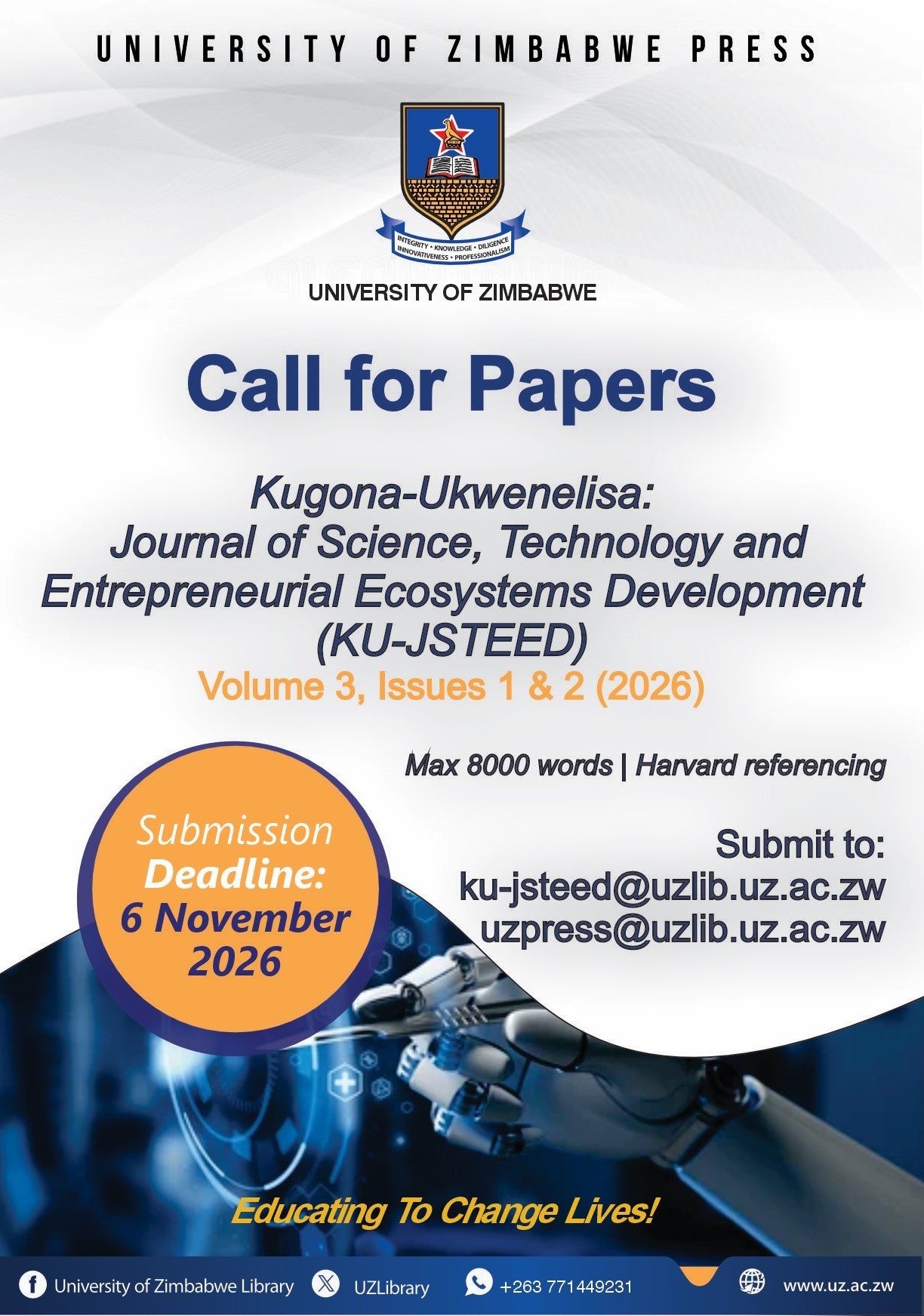
29.Mataruse, P.T., Nyikahadzoi, K. and Fallot, A., 2025. Climate and Land Use Changes in Murehwa District: Trends and Implications for Forest Ecosystems. Kugona-Ukwenelisa: Journal of Science Technology and Entrepreneurial Ecosystems Development. 1(1), pp.146-162.
30. Mataruse P. T., Nyikahadzoi K. & Fallot A. (2021). Social-ecologically Driven Threats to the Climate Change Mitigation Potential of Forests: A Case of Murehwa District. In Nyikahadzoi K. & Mhlanga L. (Eds) Climate Change Impact, Adaptation and Mitigation in Zimbabwe; Case Studies from Zimbabwe’s Urban and Rural Areas (pp. 41-62). Conrad Adenauer Stiftung. Harare, Zimbabwe
31. Mataruse, P.T., Nyikahadzoi, K. and Fallot, A., 2022. Smallholder farmers' perceptions of the natural and anthropogenic drivers of deforestation and forest degradation: a case study of Murehwa, Zimbabwe. Transactions of the Royal Society of South Africa, pp.1-10.
32.Mataruse, P.T., Nyikahadzoi, K., Fallot, A. and Perrotton, A., 2024. Using participatory mapping for a shared understanding of deforestation dynamics in Murehwa district, Zimbabwe. Cahiers Agricultures, 33, p.15
Book Chapters
1.Jackson J, Muriritirwa W and Kefasi Nyikahadzoi, 1998, An Analysis of Emerging Co-Management Arrangements in Zimbabwe's Inshore Fishery of Lake Kariba, Edts Norman K, Nielsen JR and Sverdrup Jensen S, Fisheries Co-Management in Africa, Workshop Proceedings in Malawi, Hirtshalls, Denmark, pages 99 – 12
2.Nyikahadzoi K, (2002), Contesting Inequalities in Access Rights to Natural Resources: Experiences with Zimbabwe’s Policies on Kapenta Fishery Management. Paper published in ‘Gehed K and Sarch M.T, African Inland Fisheries: The Management Challenge” pages 74 – 88.
3.Nyikahadzoi K, Mhlanga L and Haller T (2013). Fragmented management of natural resources in Lake Kariba environs, in Mhlanga L, Nyikahadzoi K and Haller T Fragmentation of Natural Resources Management Experiences from Lake Kariba, Lit, Berlin, pages 8 - 21
4.Mandima J and Nyikahadzoi K (2013) The case of land resources fragmentation and defragmentation in the Lake Kariba environs on the Zambezi in Mhlanga L, Nyikahadzoi K and Haller T Fragmentation of Natural Resources Management Experiences from Lake Kariba, Lit, Berlin. pages 23 – 36
5. Nyikahadzoi K, Mhlanga L, Hara M and Haller T, (2013), Defragmenting natural resource management within Lake Kariba environs, in Mhlanga L, Nyikahadzoi K and Haller T Fragmentation of Natural Resources Management Experiences from Lake Kariba, Lit, Berlin, pages 163 - 176
6.Adekunle A.A, Nyikahadzoi K., Siziba S., Mapemba L., Malidadi C. and Musinguzi E.I. 2011, Vegetable Production in the Thyolo District of Malawi, Putting heads together: Agricultural innovation platforms in practice, Suzanne Nederlof, Mariana Wongtschowski & Femke van der Lee (Eds.), Development, Policy & Practice, Bulletin 396, KIT publishers, Amsterdam, The Netherlands, pages 176 – 183
7.Adekunle A. A, Nyikahadzoi, K and Siziba S, 2013, Approaches to delivering impact from agricultural research and development: the case of the Sub Saharan Africa Challenge Program, Proceedings of workshop on Agricultural Innovations Systems in Africa, 29 – 31 May 2013
8.Mhlanga, W and Nyikahadzoi, K, (2016), Competing claims in Multipurpose Lake: Mapping resource conflict on Lake Kariba, in Intersectoral Governance of Inland Fisheries (eds) Song A. M, Bower S. D, Onyango P, Cooke S. J and Chuenpagdee R. pages xx - xx, St Johns, NL, Canada – see letter and sample.
9.Zamasiya B, Mataruse P. T, and Nyikahadzoi K, 2024, Determinants of Household Food Security Among Smallholder Farmers Under Changing Climates and Contexts: A Case of the Zambezi Valley in Zimbabwe, in Mhlanga L, Stack J, Nyikahadzoi K, Building Resilience to Climate Change in Selected Districts in Zimbabwe. Experiences from the Zimbabwe Resilience Building Fund Programme. DOI: 10.1007/978-3-031-80529-5. Springer.)
10. Mukamuri B, Nyikahadzoi K, Dhlakama T and Zamasiya B, 2011, Effects of Climate Change: An Introduction, in Nyikahadzoi K and Mukamuri B B, Building Climate Change Resilient Communities in Africa: Insights from Zimbabwe’s Urban and Rural Areas, Konrad Adenauer Stiftung.
11.Zamasiya B, Nyikahadzoi K, Mukamuri B. B, 2011 Hierarchical Linear Modelling (HLM) Technique: A Case Study of Smallholder Farmers in Hwedza District in Zimbabwe, in Nyikahadzoi K and Mukamuri K. K, Building Climate Change Resilient Communities in Africa: Insights from Zimbabwe’s Urban and Rural Areas, Konrad Adenauer Stiftung.
12.Ruparanganda L, Nyikahadzoi K, 2011 Investigating the Effects of Climate Change on Households' Food Security and Community Response Strategies in Zimbabwe: The Case Of Female-Headed Households in Ward 30, Buhera District, in Nyikahadzoi K and Mukamuri B B, Building Climate Change Resilient Communities in Africa: Insights from Zimbabwe’s Urban and Rural Areas, Konrad Adenauer Stiftung.
13.Phiri C, Mhlanga W, Nyaguse G, Ndhlovu N, Nyikahadzoi K, The Impact of Climate-Change And Fishing Effort On Kapenta Catches In Lake Kariba, in Nyikahadzoi K and Mukamuri B B, Building Climate Change Resilient Communities in Africa: Insights from Zimbabwe’s Urban and Rural Areas, Konrad Adenauer Stiftung.
14. Nyikahadzoi K, Mukamuri B B, Zamasiya B, Enhancing the Climate Change Adaptive Capacity Of Communities In Zimbabwe: Insights From The Case Studies (Zimbabwe), in Nyikahadzoi K and Mukamuri B B, Building Climate Change Resilient Communities in Africa: Insights from Zimbabwe’s Urban and Rural Areas, Konrad Adenauer Stiftung.
Books
1.Mhlanga, L., Nyikahadzoi, K., & Haller, T. (Eds.) (2014). Fragmentation of Natural Resources Management: Experiences from Lake Kariba. PLAAS. Lit-Verlag Switzerland. www.lit-verlag.ch ISBN 978-3-643-90400-3.
2.Nyikahadzoi K. & Mhlanga L. (2021). Climate Change Impact. Adaptation and Mitigation in Zimbabwe: Case Studies from Zimbabwe’s Urban and Rural Areas. Konrad Adenauer Stiftung.
3. Mhlanga L., Nyikahadzoi K. & Stack J. (2025). Building Resilience to Climate Change in Selected Districts in Zimbabwe. Experiences from the Zimbabwe Resilience Building Fund Programme. DOI: 10.1007/978-3-031-80529-5. Springer.)
4.Mhlanga L., Nyikahadzoi K. & Stack J. (2025). Building Resilience to Climate Change in Selected Districts in Zimbabwe. Experiences from the Zimbabwe Resilience Building Fund Programme. DOI: 10.1007/978-3-031-80529-5. Springer.)
5.Byron Zamasiya and Kefasi Nyikahadzoi The Economic Impacts of Climate Change in Zimbabwe’s Agricultural Sector, in, Murombo T, Dhliwayo M and Dhlakama T, Climate Change Law in Zimbabwe, Concepts and Insights